
Africa Is Rewriting the Rules: Why AI and Technology Could Accelerate the Continent's Next Leap Forward
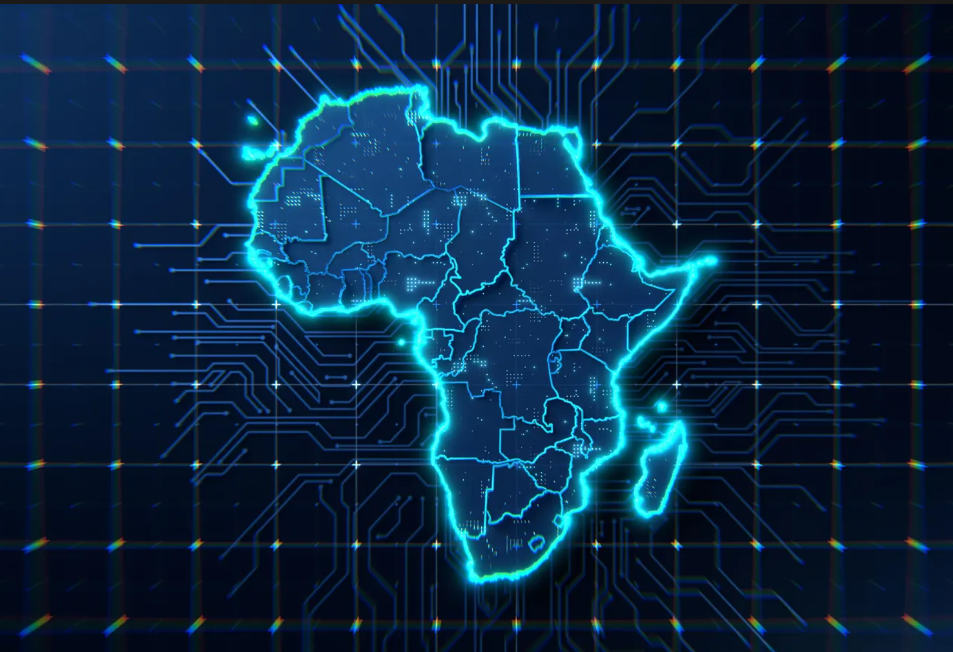
Artificial intelligence and mobile connectivity are altering the economics of global participation for Africa. This shift offers a rare opportunity to bypass traditional structural barriers through digital scale and innovation.
Africa Is Rewriting the Rules: Why AI and Technology Could Accelerate the Continent's Next Leap Forward
By Eng. Ben Kairu | Entrepreneur · Author · Strategist
Founder – Sunrise Virtual School (40+ countries) · Xcans Social · Harvest Berry Ltd
Published on Africa Opportunity Index | africaopportunityindex.co
For most of the past century, the barriers that held back African economies were structural and deeply entrenched: limited infrastructure, restricted access to capital, thin industrialisation, and unequal integration into global trade systems. These were not problems that ambition alone could solve. They required capital, time, institutions, and policy — all of which moved slowly.
That context is changing. Not because Africa's challenges have disappeared, but because a new set of tools — artificial intelligence, mobile connectivity, cloud computing, and digital platforms — is altering the economics of participation in the global economy. For the first time, a graduate in Nairobi, a farmer in Kano, or an entrepreneur in Accra can access knowledge, markets, and tools that were previously available only to those in well-resourced institutions in wealthy countries.
This is not a guaranteed transformation. It is an opportunity — one that will only materialise if matched by deliberate investment in skills, infrastructure, governance, and policy. But the window is open, and its implications deserve serious examination.
The Structural Advantage Africa Has Not Yet Fully Leveraged
Africa's most frequently cited asset is its young population. With a median age of around 19 years and a projected population of over 2.5 billion by 2050 (UN Population Division), Africa will account for a significant share of the world's working-age population over the next three decades.
That demographic dividend, however, is not automatic. It becomes an advantage only when young people are educated, skilled, and connected to productive economic activity. When those conditions are not met, demographic growth becomes demographic pressure.
What AI and digital technology do is change the economics of meeting those conditions. Educating, skilling, and connecting large numbers of people is significantly cheaper at digital scale than through traditional brick-and-mortar infrastructure alone. This does not eliminate the need for physical infrastructure — schools, hospitals, roads, energy — but it does create parallel pathways that can move faster and reach further.
Mobile-First: Africa's Accidental Advantage
Africa largely bypassed the desktop computing era. While this was historically framed as a disadvantage, it has produced an unexpected structural benefit: Africa built its digital economy on mobile, which turns out to be the dominant interface for the next phase of global digital expansion.
Mobile money, pioneered in Kenya with M-Pesa and now operating across dozens of African markets, demonstrated what was possible when financial services were designed for mobile-first populations. The same logic now applies to education, healthcare, agriculture, logistics, and commerce. According to GSMA data, sub-Saharan Africa continues to record some of the fastest rates of mobile subscriber growth globally, with mobile internet penetration expanding as infrastructure investment increases.
The implication is that African consumers, businesses, and governments are not catching up to a mobile world — they are already in it. The question is whether the applications, platforms, and services built on top of this infrastructure will be African-built and African-owned, or imported from elsewhere.
AI as an Equaliser — With Important Caveats
The most significant shift AI introduces is the democratisation of expertise. A small business owner who cannot afford a financial consultant can access AI-powered accounting tools. A student in a school with few qualified teachers can access AI tutoring. A farmer with no agronomist nearby can access AI-driven crop advisory services. A first-generation entrepreneur with no legal background can access AI tools that help structure contracts and business plans.
This compression of the expertise gap is real, and its economic implications are significant. McKinsey Global Institute research has consistently shown that technology-enabled access to expertise and services in emerging markets accelerates productivity growth at a faster rate than in markets where those services were already widely available.
However, three caveats must be clearly stated.
First, AI tools are only as useful as the connectivity and devices that deliver them. Without sustained investment in electricity access, affordable smartphones, and broadband infrastructure, the democratisation of AI remains theoretical for hundreds of millions of Africans.
Second, AI augments those who have foundational literacy and skills. A student who cannot read and a worker with no numeracy will not benefit from AI tools designed for literate users. Investment in foundational education remains non-negotiable.
Third, AI creates displacement as well as opportunity. Jobs that are routine, codifiable, and repetitive are vulnerable to automation — and many of the formal sector jobs that have historically provided a first rung on the economic ladder fall into this category. Governments and education systems need to anticipate this, not react to it.
Lower Barriers to Entrepreneurship
One of the most concrete ways AI and digital technology are reshaping Africa's economy is by reducing the cost of starting and running a business. A decade ago, launching a software company in Lagos required significant upfront investment in servers, licenses, and technical talent. Today, cloud platforms, open-source tools, and AI-assisted development environments have reduced those barriers substantially.
This is showing up in the data. African tech startup funding, while still a fraction of global venture capital, has grown significantly over the past decade. More importantly, the composition of that ecosystem is diversifying — with founders building solutions in agriculture (AgriTech), healthcare (HealthTech), logistics, education, and financial services, rather than simply replicating consumer internet models from other markets.
The more important story, however, is not the venture-funded startup ecosystem. It is the millions of micro and small enterprises — traders, artisans, service providers, farmers — who are accessing digital platforms for payments, discovery, and market access for the first time. For these businesses, the economic impact of digital tools is immediate and concrete.
Digital Trade and the Geography of Opportunity
Digital work is removing geography as a constraint on economic participation. A software developer in Kampala, a graphic designer in Dakar, or a financial analyst in Johannesburg can now work for clients anywhere in the world. The global market for digital services is large, growing, and accessible to those with the right skills and connectivity.
This has particular implications for Africa's talent. The continent's young professionals no longer need to emigrate to access global economic opportunities. They can participate remotely — while remaining on the continent, building local wealth and local expertise.
The World Bank and IFC have highlighted digital trade as one of the most significant near-term opportunities for developing economies, particularly in services exports. Africa's share of global digital services exports remains small, but the trajectory is upward, and the infrastructure for acceleration exists.
What Must Happen for the Opportunity to Materialise
The risk of this moment is not that AI and technology will fail to create opportunities. It is that those opportunities will be unevenly distributed — captured by a connected, educated minority while leaving the majority behind.
Preventing that outcome requires deliberate action from multiple stakeholders.
Governments must invest in electricity access, broadband infrastructure, and digital literacy programmes. They must create regulatory environments that enable innovation without concentrating market power in the hands of a few large platforms. And they must reform education systems to produce graduates with the skills the digital economy requires — not the skills the industrial economy demanded.
Investors must look beyond the major metropolitan tech hubs and fund solutions that work for rural populations, smallholder farmers, and informal sector workers. The biggest opportunities in Africa are not at the top of the income pyramid.
Entrepreneurs must resist the temptation to copy models designed for different markets. The most durable African companies will be those that solve problems that actually exist in African contexts — with solutions designed for African infrastructure constraints, income levels, and cultural contexts.
Educators and universities must move faster. The gap between what African universities are teaching and what the digital economy requires is widening. Closing it requires curriculum reform, industry partnership, and a willingness to treat digital literacy and AI competency as foundational — not optional.
The Opportunity Is Not Guaranteed
It would be easy to conclude this piece with a statement about Africa's boundless potential. That conclusion would be true — and useless.
The more important statement is this: the opportunity created by AI and digital technology is real, it is time-sensitive, and it is contingent. It will materialise for the countries, organisations, and individuals who act with urgency, invest with intentionality, and build with the specific realities of African contexts in mind.
The tools exist. The talent exists. The market exists. What has historically been missing is the combination of capital, policy, and institutional focus required to turn potential into outcomes.
That combination is now more within reach than at any previous point in the continent's history. The question is whether those with the ability to act will do so — and how quickly.
Eng. Ben Kairu is an entrepreneur, author, and strategist. He is the founder of Sunrise Virtual School, a leading virtual school operating in over 40 countries; Xcans Social, a social and utility platform; and Harvest Berry Ltd, an agriprocessing chain.