
AI and Content Creation in Africa: The Tools, the Opportunities and the Honest Limits
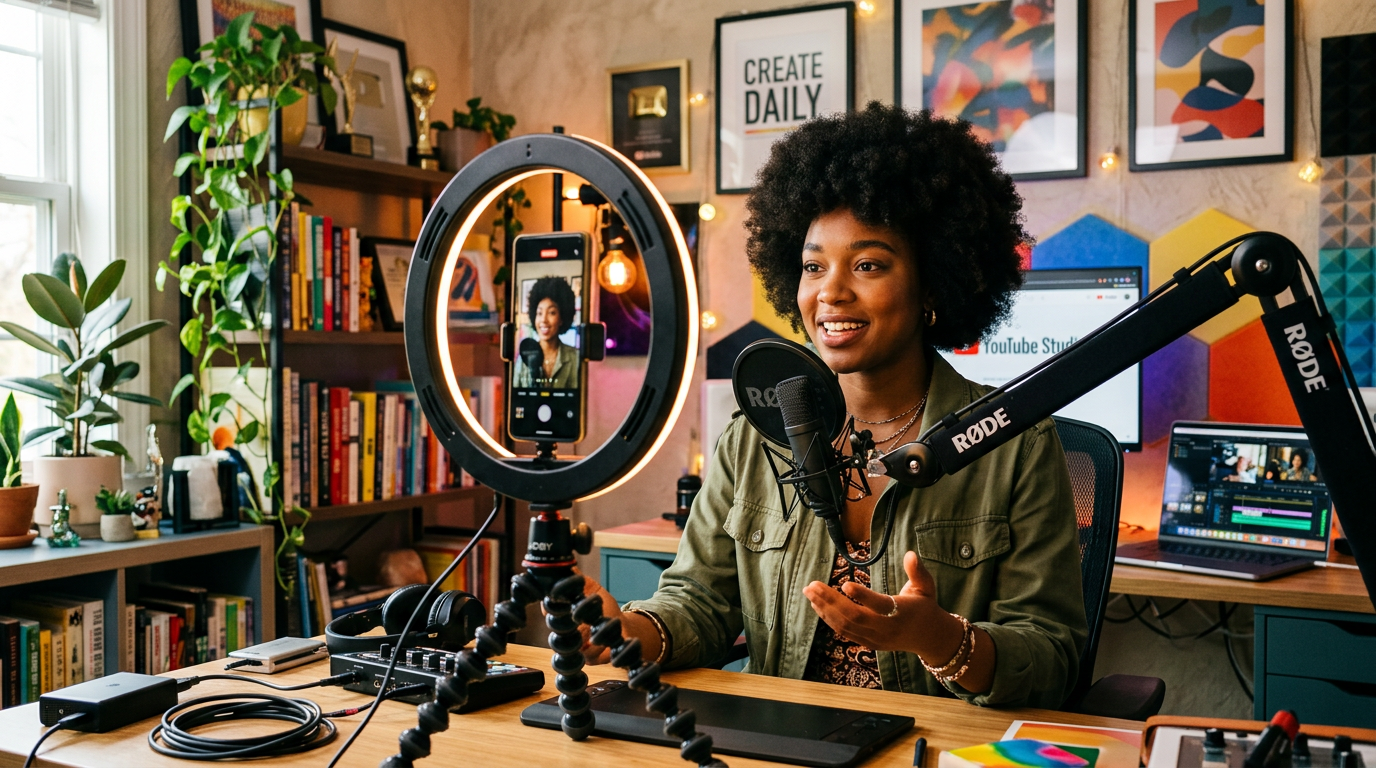
How African creators are using artificial intelligence to produce better content faster — with specific tool recommendations, practical workflows, and an honest assessment of where AI helps and where it falls short.
For African creators who have built audiences through authenticity, insight, and cultural resonance — qualities that algorithms don't create and AI cannot replicate — artificial intelligence represents a double-edged opportunity. On one side: dramatic reductions in the time and cost of producing professional-quality content, enabling creators to publish more, produce better, and reach further with the same resources. On the other: the risk that AI-generated or heavily AI-assisted content loses the human distinctiveness that makes audiences trust and follow specific creators rather than consuming algorithmically selected content from no one in particular.
Navigating this tension — using AI for the parts of content creation it genuinely improves, while preserving the human elements that create lasting audience relationships — is the central creative challenge of the current moment for African creators.
Where AI Genuinely Helps African Creators
Video Editing and Post-Production
Video editing has historically been one of the highest-friction parts of content creation — requiring either expensive software licences, significant technical skill, or the cost of hiring a professional editor. AI editing tools have dramatically reduced all three barriers. CapCut — the most widely used editing app among African creators — includes AI features for automatic caption generation, background removal, sound enhancement, and basic cut detection that previously required professional editing knowledge. Descript enables creators to edit video by editing the transcript text — deleting words in the transcript removes the corresponding video segment — making the editing process accessible to creators who have never learned traditional video editing software.
For African creators who previously published weekly because editing their monthly videos took the remaining three weeks, AI editing tools that compress this to days create a meaningful competitive advantage through publication frequency alone.
Thumbnail and Graphic Design
YouTube thumbnails — the images that determine whether potential viewers click on a video — are among the highest-impact single elements of a YouTube channel's performance, and professional thumbnail design has historically required Photoshop skills or a designer budget. AI design tools including Canva's AI features, Adobe Firefly, and Midjourney have made professional-quality thumbnail creation accessible without either skill set. African creators who have upgraded their thumbnails using AI design tools consistently report significant improvements in click-through rate — sometimes 50–100% increases — with corresponding growth in total video views.
Research and Scriptwriting Assistance
AI writing assistants — Claude, ChatGPT, and Gemini — provide genuine value in the research and scripting phase of content creation. Generating outlines for complex topics, researching facts and statistics, suggesting angles and framings that the creator had not considered, and drafting initial script structures that the creator then rewrites in their own voice — all of these are legitimate AI-assisted practices that improve content quality without eliminating the creator's genuine expertise and perspective.
The critical distinction is between AI as a research and structural assistant (good) and AI as the primary content generator whose output the creator publishes with minimal revision (problematic). Audiences follow specific creators because of specific perspectives, voices, and expertise — AI-generated content without human editorial layer produces generic output that audiences recognise as such, even if they cannot articulate why it feels hollow.
Translation and Subtitles
For African creators who want to reach multilingual audiences — the Swahili speaker who wants their content understood by Hausa speakers, the French speaker who wants to reach English-speaking African markets — AI translation and automatic subtitle generation tools have dramatically reduced the cost and time of multilingual content distribution. YouTube's automatic subtitle generation (available in English and several other languages), combined with AI translation tools for less-supported African languages, enables creators to reach audiences beyond their primary language community at near-zero marginal cost.
Where AI Fails African Creators
AI cannot generate cultural authenticity. The Nigerian creator whose comedy resonates because it draws on specific Lagos cultural references, verbal patterns, and shared experiences that her audience recognises — this creator's resonance comes from lived cultural knowledge that no AI trained primarily on Western data can replicate. The Kenyan entrepreneur whose business content builds trust because it reflects hard-won experience building in Kenyan market conditions — this creator's credibility rests on genuine expertise that AI cannot simulate convincingly to the experts in their audience.
AI also cannot build relationships. The comments section engagement, the DM conversations, the live stream interaction, the community inside jokes — these are the relationship dimensions of creator-audience connection that create the deepest loyalty and highest monetisation potential. AI can assist with content production; it cannot substitute for the human presence that makes audiences feel known and valued.
The Practical AI Workflow for African Creators
- Research phase: Use AI to identify angles, research facts, generate outline options. Spend 30 minutes with an AI assistant exploring your topic before committing to an approach.
- Scripting: Write your own script, in your own voice. Use AI to review for clarity and completeness, not to write for you.
- Production: Record yourself. Use AI background noise removal for audio quality.
- Editing: Use AI tools (CapCut, Descript) to create rough cut. Add human judgment for pacing, emotional beats, and the moments that make your content distinctively yours.
- Thumbnails and graphics: Use AI design tools, but add your brand personality and test multiple options.
- Captions and subtitles: Use AI auto-captions, then review and correct for accuracy.