
Cross-Border Commerce in Africa: The $1 Trillion Opportunity of Intra-African Trade
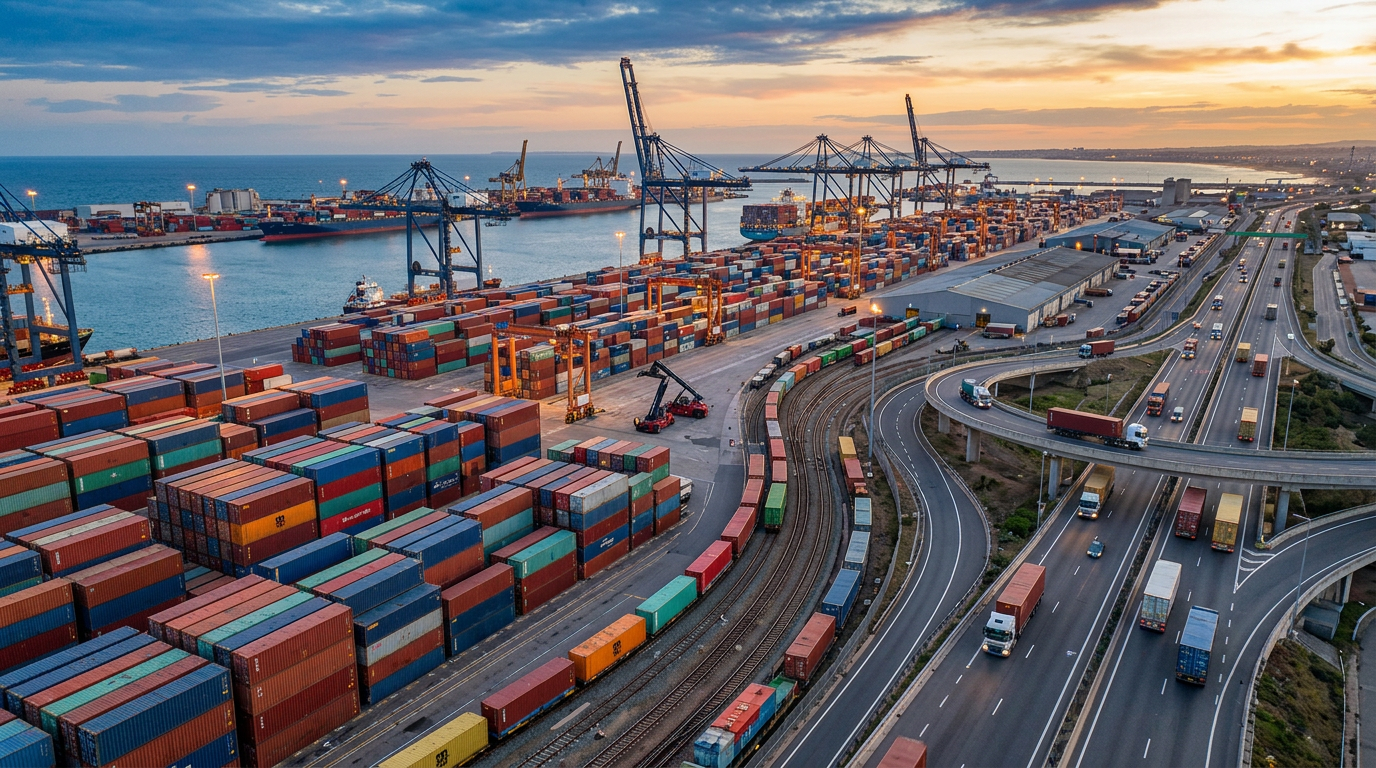
An analysis of intra-African cross-border commerce — the enormous potential, the persistent barriers, how the AfCFTA is changing the equation, and the entrepreneurs building the infrastructure for continental trade.
The statistics that best illustrate Africa's cross-border commerce opportunity are also those that most reveal how much potential remains unrealised. Intra-African trade accounts for approximately 15–18% of total African trade — compared to 60–70% for Europe and 55–60% for Asia. An African country is, on average, more likely to trade commercially with a European country than with its African neighbour. This structural anomaly is not a natural outcome — it reflects historical trade patterns established by colonial economies oriented toward metropoles rather than neighbours, persistent tariff and non-tariff barriers between African countries, inadequate transport and logistics infrastructure linking African economies, and payment systems that make intra-African transactions more expensive and slower than extra-African ones.
The AfCFTA: The Game-Changer
The African Continental Free Trade Area — which entered into force in January 2021 and has been signed by 54 of the 55 African Union member states — is the most significant structural change to African trade in the post-independence era. At full implementation, AfCFTA will eliminate tariffs on 90% of goods traded between member states, create a unified African market of 1.4 billion people with a combined GDP of over $3 trillion, and establish common frameworks for services trade, investment, intellectual property, and competition policy.
The implementation trajectory matters enormously — AfCFTA's ambition will not be achieved overnight, and the gap between the agreement's aspirations and its implementation reality is significant. Phase 1 tariff reductions have begun but are partial; services trade liberalisation is still being negotiated; and the non-tariff barriers (customs procedures, standards and certification differences, import licensing requirements) that are in many ways more important than tariffs have not yet been systematically addressed. Nevertheless, AfCFTA represents a fundamental reorientation of the structural context for intra-African commerce — and entrepreneurs and investors who position for the emerging trade landscape rather than the current one will benefit most from the decade-long implementation that is underway.
Digital Commerce's Role in Cross-Border Trade
Digital commerce has a specific and important role in accelerating intra-African trade beyond what tariff reductions alone can achieve. For small and medium enterprises — which collectively represent the majority of African economic activity but individually lack the resources to navigate complex trade procedures — digital platforms that aggregate and simplify cross-border selling are transformative. A Ghanaian fashion designer who can list and sell products to customers across West Africa through a single digital platform, with payment, logistics, and basic customs documentation handled by the platform, has access to a regional market that would previously have required significant export infrastructure investment to reach.
Several platforms are specifically building this cross-border digital commerce infrastructure for African markets. Jumia's pan-African presence — despite its operational challenges — provides a marketplace infrastructure that in principle enables sellers in any of its operating markets to reach buyers across the network. Platforms specifically focused on the cross-border opportunity, including Tradeling (Middle East/Africa), DHL Express's e-commerce tools, and several sector-specific trade platforms, are building the digital infrastructure for formalised intra-African commerce.
The Logistics Infrastructure Gap
The most significant practical barrier to intra-African cross-border commerce is logistics — getting goods physically across African borders efficiently and affordably. Road infrastructure between African countries is improving but remains inadequate for high-volume trade in many corridors. Air freight — often the only reliable option for time-sensitive goods — is expensive, with limited direct routes between many African city pairs requiring routing through European hubs. Customs procedures at African land borders are frequently time-consuming, unpredictable, and vulnerable to informal charges that add cost and uncertainty.
The logistics infrastructure gap is being attacked from multiple directions. African governments are investing in road, rail, and port infrastructure with increasing urgency and with significant Chinese development finance support. Air freight operators are adding new African routes as demand grows. And digital customs platforms — one-stop-shop digital systems for cross-border trade documentation — are beginning to reduce the administrative friction at African borders. Progress is real but insufficient relative to the scale of the opportunity.
Where the Cross-Border Commerce Opportunity Is Most Accessible
For entrepreneurs building cross-border commerce businesses, the most accessible opportunities in the near term are in corridors with established trade relationships, improving logistics infrastructure, and overlapping digital payment systems. The East African Community — Kenya, Uganda, Tanzania, Rwanda, Burundi, South Sudan, DRC — has the most advanced trade integration framework and the most established cross-border trade routes. West Africa's ECOWAS zone, while more linguistically fragmented (Anglophone and Francophone), has significant informal trade flows that digital platforms can formalise and scale. The Southern African Development Community (SADC) zone, anchored by South Africa's commercial infrastructure, offers significant potential for regional commerce development.