
Dar es Salaam Opportunity Index 2025: East Africa's Quiet Commercial Capital
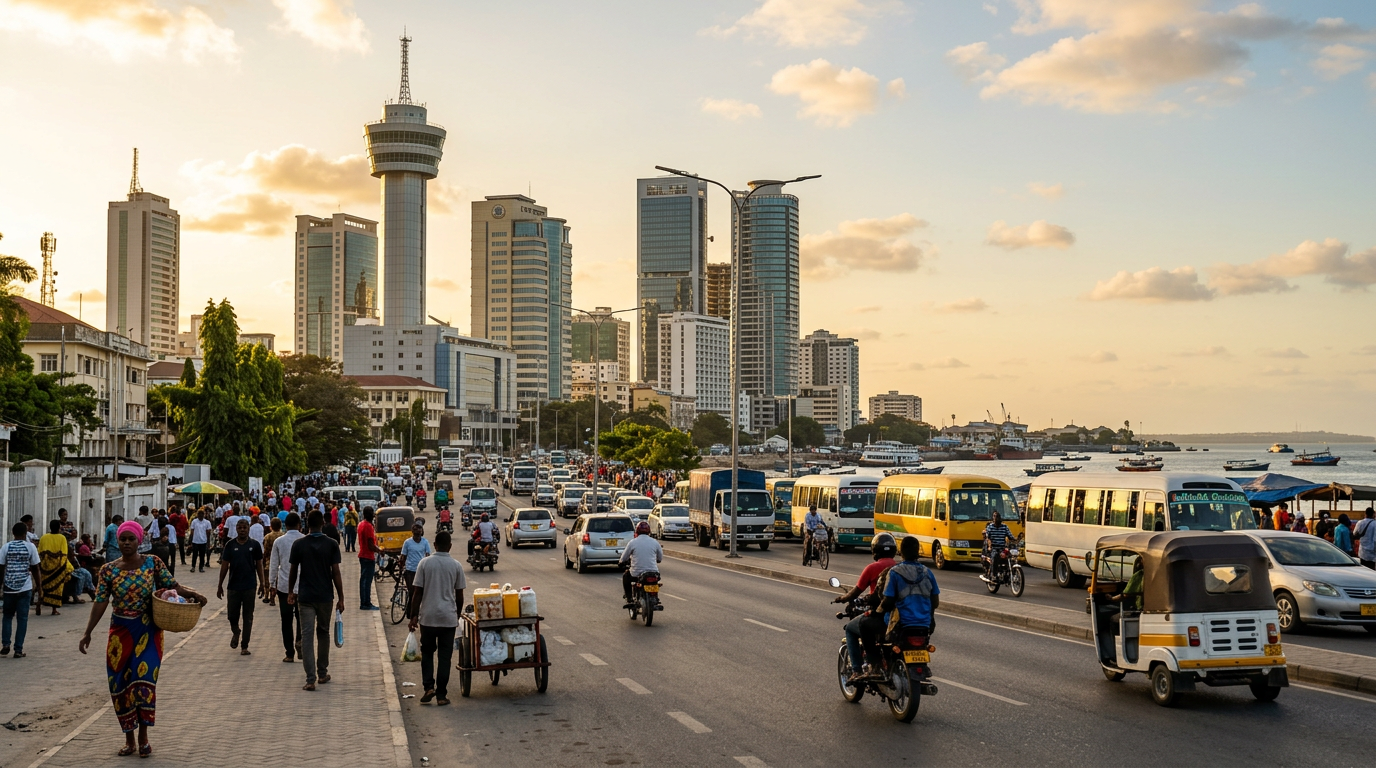
A comprehensive assessment of Dar es Salaam
Dar es Salaam occupies a curious position in East African commercial analysis — too significant to ignore but consistently overshadowed by Nairobi's startup narrative and Lagos's funding dominance. Yet Tanzania's commercial capital is a city of 6 million people that is growing faster than almost any other African major city (at approximately 5% annually), serves as the gateway for one of Africa's most resource-rich hinterlands, has a port that competes with Mombasa for East African trade, and has a digital economy that is earlier-stage than Nairobi's but growing at comparable pace from a lower base. For entrepreneurs who look at the competitive landscape and prefer building where the competition is less intense, Dar es Salaam offers a genuinely interesting value proposition.
Digital Economy Opportunity Score: 7.5/10
Tanzania's digital economy is growing significantly, and Dar es Salaam is its primary centre. Mobile money penetration — driven by Vodacom's M-Pesa — is extraordinary: over 15 million active accounts in a country of 65 million people, with penetration depth in rural areas that rivals or exceeds Kenya's in some regions. The fintech opportunity layered on this mobile money infrastructure is substantial: credit products, insurance, savings, and investment tools designed for Tanzania's mobile money user base are significantly underserved. E-commerce is growing, driven by improving smartphone penetration and the increasing normalisation of digital commerce post-COVID. And the digital tourism sector — booking platforms, tour management tools, and digital marketing for Tanzania's extraordinary wildlife and safari tourism industry — is an active commercial category with strong growth fundamentals.
Swahili-Language Opportunity: 8.0/10
One of Dar es Salaam's most distinctive opportunities is the Swahili-language digital economy — building products and content for the estimated 200 million Swahili speakers across East and Central Africa. While Nairobi-based companies typically build in English for the English-proficient minority, Dar es Salaam's Swahili-first environment is a natural base for companies building products, content, and services for the Swahili-speaking majority. The competition in this space is significantly lower than in English-language digital markets, and the audience scale is larger than many niche English-language markets that attract far more commercial attention.
Trade and Logistics Score: 8.0/10
The Port of Dar es Salaam competes with Mombasa for East African landlocked country trade, serving Zambia, Malawi, DRC (eastern), and portions of Uganda and Rwanda through the central corridor. This trade gateway position creates commercial opportunities in logistics technology, trade finance, freight forwarding, and customs services that are specific to Dar es Salaam's sector profile. The TAZARA railway corridor (Tanzania-Zambia Railway) adds a Southern Africa trade connectivity dimension. For entrepreneurs building in trade, logistics, or regional supply chain, Dar es Salaam's central corridor positioning offers distinct commercial advantages from Mombasa's northern corridor focus.
Opportunity Index Summary
| Dimension | Score | Key Strength | Key Gap |
|---|---|---|---|
| Digital Economy | 7.5/10 | M-Pesa penetration, growing e-commerce | English-Swahili transition adds complexity |
| Swahili Language Opportunity | 8.0/10 | 200M speaker market, low competition | Requires Swahili capability or partners |
| Trade and Logistics | 8.0/10 | Central corridor port, landlocked country access | Port efficiency improvements still underway |
| Startup Ecosystem | 5.5/10 | Growing, improving infrastructure | Early stage, limited investor presence |
| Talent Market | 6.5/10 | Young graduate pool, affordable | Swahili-first environment limits international talent |
| Cost of Doing Business | 8.0/10 | Significantly below Nairobi equivalent | Currency volatility risk |
| Market Access | 7.5/10 | 65M domestic, hinterland access, tourism | Less regional hub than Nairobi |
| Overall Score | 7.3/10 | East Africa's best second-tier opportunity city | |