Ethiopia Opportunity Report 2025: The Giant Waking Up
An analysis of Ethiopia
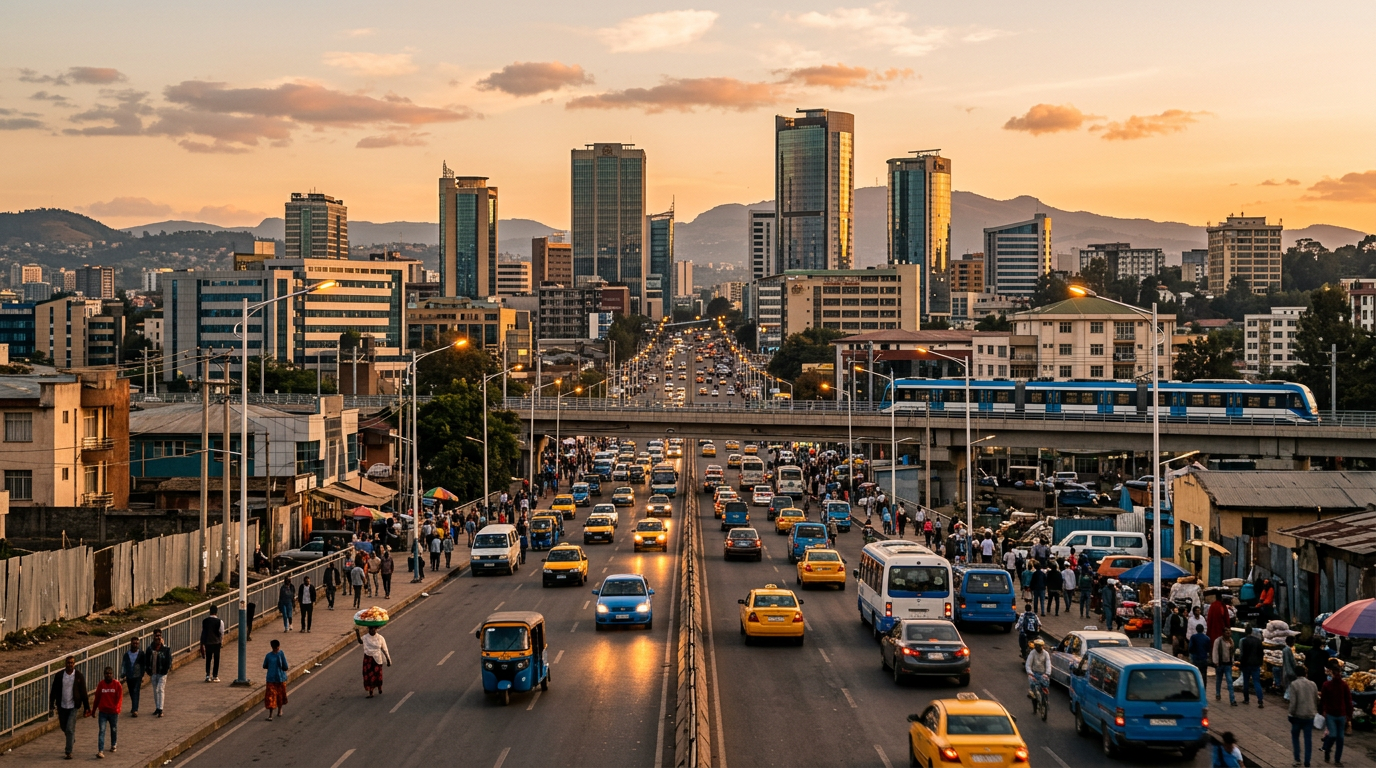
Ethiopia presents the most complex opportunity assessment of any major African economy. The case for Ethiopia as one of Africa's most compelling investment destinations is genuine: 130+ million people (Africa's second-most-populous country), extraordinary agricultural potential across diverse highland and lowland climates, a government committed to industrial transformation and increasingly open to private investment, an ancient culture of entrepreneurship and trade, and decades of economic growth that have created a growing urban middle class. The case for caution is also genuine: recent civil conflict in the Tigray region that caused significant economic disruption and international isolation, ongoing security challenges in several regions, nascent financial and capital market infrastructure, and an investment environment that is still developing the institutional depth that sophisticated investors require.
Economic Overview and Recent History
Ethiopia was one of Africa's fastest-growing economies for 15 years before the COVID-19 pandemic and the subsequent Tigray conflict disrupted its trajectory. The country achieved sustained GDP growth averaging over 10% annually from 2004–2019, driven by massive public investment in infrastructure (roads, railways, industrial parks, dams), export agriculture (particularly coffee, flowers, and sesame), and an expanding manufacturing sector anchored by the Hawassa Industrial Park's garment manufacturing cluster.
The 2020–2022 Tigray conflict — which involved the Ethiopian federal government, Tigrayan forces, and Eritrean military in a devastating civil war — caused significant loss of life, massive displacement, and significant economic damage in northern Ethiopia. The Pretoria Peace Agreement signed in November 2022 ended active hostilities, and the reconstruction process has been underway since. The economic recovery has been meaningful — GDP growth continued even during the conflict years — but the international isolation and reputational damage have affected investor confidence and external financing access.
The Liberalisation Story
The most significant economic development of PM Abiy Ahmed's government (2018–present) is the liberalisation of sectors previously closed to private and foreign investment. Telecommunications: Safaricom Ethiopia (the consortium including Safaricom Kenya and several international partners) began operations in 2022, ending Ethio Telecom's monopoly and dramatically improving telecommunications quality and coverage. Banking: the banking sector is being opened to foreign equity participation for the first time, with international banks beginning to establish Ethiopian operations. Logistics: private sector freight and logistics services are being expanded. These liberalisations are creating genuine greenfield opportunities in sectors that have been effectively closed to commercial development for decades.
Key Opportunities
Financial Services
Ethiopia's banking sector liberalisation — opening the sector to both private domestic banks (several new licences have been issued) and foreign participation — represents one of Africa's most significant financial services opening opportunities. A population of 130 million with banking penetration below 40% represents an enormous addressable market. Mobile money, which has been limited by Ethio Telecom's monopoly constraints, is expanding rapidly as Safaricom Ethiopia launches its M-Pesa service. The combination of large underbanked population and newly liberalised financial sector creates a financial inclusion opportunity comparable to Kenya's early mobile money years, but at much larger scale.
Agriculture and Food Processing
Ethiopia's agricultural sector employs 70%+ of the population and is the country's most significant economic sector. Coffee is the most internationally known — Ethiopia is the birthplace of coffee and produces some of the world's most prized varieties — but the opportunity spans grains, pulses, oilseeds, flowers, and vegetables. Agricultural value addition — processing Ethiopian agricultural products domestically rather than exporting raw commodities — is an explicit government priority with industrial park infrastructure provided specifically for agro-processing companies.
Manufacturing
Ethiopia's industrial park programme — which provides electricity, infrastructure, and logistics for manufacturing companies — has attracted garment, textile, and light manufacturing companies seeking a combination of low labour costs (among Africa's lowest for manufacturing workers), improving infrastructure, and government support. The Hawassa Industrial Park hosts operations from international garment companies; other parks are developing in different regions with sector-specific focus. As labour costs rise in East Asia and companies diversify manufacturing supply chains, Ethiopia is increasingly on the short-list of African manufacturing destinations.
Operating Reality
Operating in Ethiopia requires specific adaptations. Foreign exchange availability has been constrained — importing materials and repatriating profits have both been affected by periodic FX shortages. The Amharic-language business environment requires either Amharic capability or reliable local partnerships for effective daily operation. Infrastructure outside Addis Ababa, while improving, lags significantly behind the capital. And the security environment in some regions — the Oromia unrest, residual Tigray tensions, and Somali regional dynamics — requires ongoing monitoring and contingency planning.
The most successful international investors in Ethiopia share a common characteristic: they have invested in deep local relationships and genuine local partnerships rather than attempting to operate with primarily international teams. Ethiopia rewards those who engage with its specific cultural and business context; it is less welcoming to operators who assume that standard international business approaches translate directly.