
The Future of Logistics in Africa: Connecting a Continent
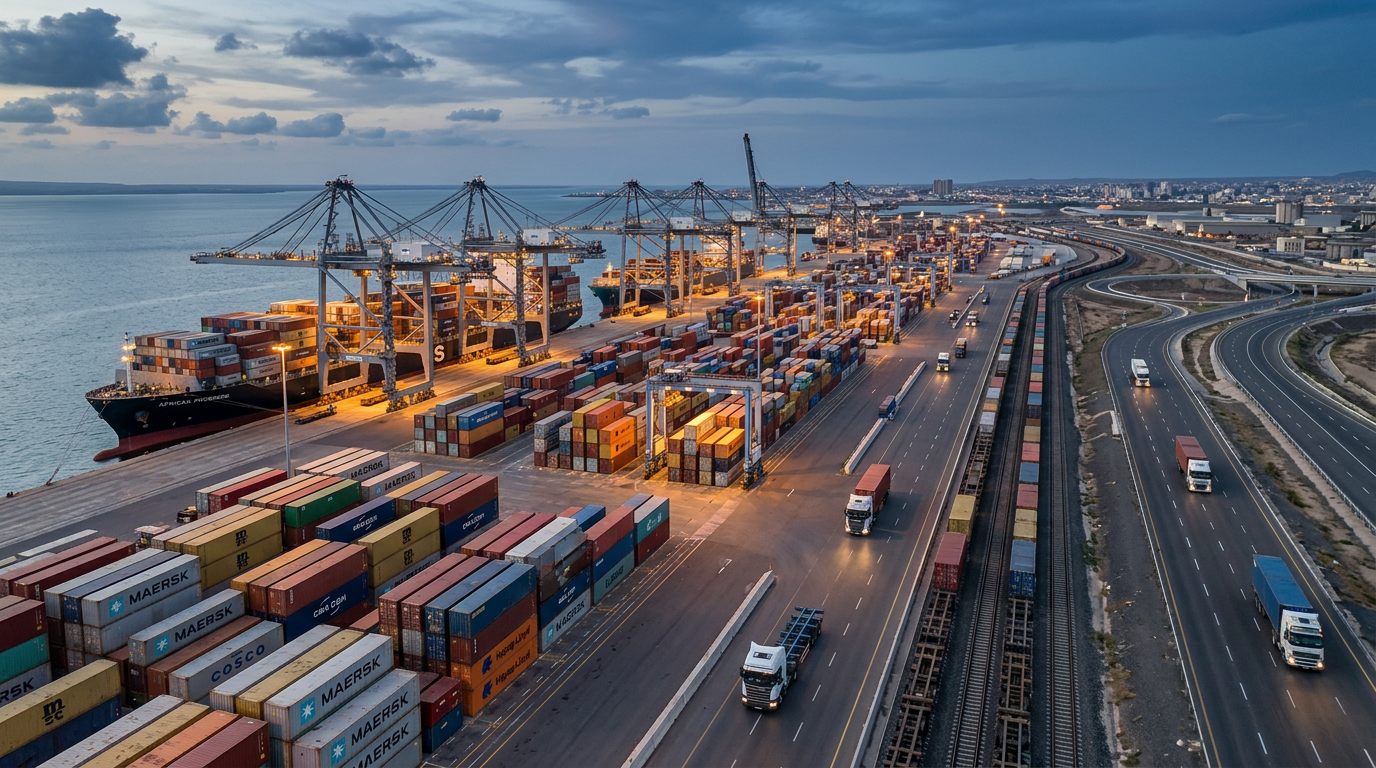
A comprehensive analysis of African logistics transformation — the infrastructure gaps, technology solutions, investment flows, and the entrepreneurs building the supply chain networks that commerce requires.
Logistics is the unseen infrastructure of commerce. When it works, goods flow from producer to consumer efficiently and affordably. When it fails — as it so often does in African contexts — the consequences ripple through every sector: farmers' produce spoils before reaching markets, manufacturers' input costs inflate through supply chain friction, e-commerce companies fail to deliver on their promises, and economic activity that could happen does not. Africa's logistics challenge is not merely an operational inconvenience — it is estimated to add 30–40% to the cost of goods across the continent relative to comparable markets with better infrastructure, a tax on economic activity that reduces competitiveness and constrains growth.
The Infrastructure Reality
Understanding Africa's logistics challenge requires confronting the infrastructure reality directly. Road infrastructure — the primary mode for 90% of African freight — is adequate in a minority of the continent's road network and severely inadequate in a majority. The African Development Bank estimates that approximately 50% of Africa's rural roads are impassable during rainy seasons, cutting communities off from markets for months annually. Rail infrastructure — which would be far more efficient for bulk freight — is fragmented, under-maintained, and in many cases operating on colonial-era gauge systems that prevent regional connectivity.
Port infrastructure, while improving significantly in several major ports (Mombasa, Dar es Salaam, Lagos Apapa, Durban, Tema, and others have received significant investment), remains a bottleneck in several key markets — with port congestion, inefficient customs procedures, and inadequate inland container depot infrastructure adding days or weeks to import and export transit times. The cost of moving a container through an African port is typically 2–3 times higher than through a comparable European or Asian port.
Technology Transforming African Logistics
Digital Freight Platforms
Digital freight platforms — marketplaces that connect shippers with available trucking capacity — are one of the most commercially active areas of African logistics technology. Kobo360 (Nigeria/pan-African), Lori Systems (East Africa, acquired by Kobo360), Sendy (East Africa), and several others have built platforms that improve asset utilisation for truck owners and reduce cost and complexity for shippers. By aggregating and digitising what was previously a manually-coordinated, relationship-based market, these platforms have reduced freight costs by 15–25% in corridors where they operate, while improving reliability and providing shippers with real-time cargo tracking that was previously unavailable.
Last-Mile Innovation
Last-mile delivery — the final step from warehouse or collection point to the recipient — is Africa's most expensive and most technically challenging logistics problem. Companies including Sendy (now focusing on B2B), DHL Express (with significant Africa last-mile investment), and dozens of city-specific last-mile startups have developed various approaches: motorcycle-first delivery networks, collection point networks (eliminating doorstep delivery), and crowd-sourced delivery models. None has fully solved the problem — the addressing system challenge, traffic congestion, and high-density informal settlement logistics remain genuinely difficult — but the collective progress is meaningful.
Cold Chain
Cold chain — the temperature-controlled logistics infrastructure required for perishable goods (food, pharmaceuticals, vaccines) — is Africa's most significant logistics infrastructure gap relative to the economic cost of its absence. An estimated 30–50% of African agricultural production is lost post-harvest due primarily to lack of cold storage and temperature-controlled transport. Companies including SnoFresh (Nigeria), Koolair (Nigeria), and several others are building cold chain infrastructure for agricultural commodities. The pharmaceutical cold chain gap — which affects vaccine efficacy and medicine quality — is receiving increasing attention from both private sector logistics companies and international health organisations.
Investment Landscape
African logistics has attracted significant venture capital investment — Kobo360 raised $30M+ in multiple rounds; Sendy raised $20M; several other platforms have raised meaningful capital. Development finance institutions are also active — the IFC, AfDB's Africa50 fund, and several bilateral DFIs have made significant investments in port upgrades, road construction, and logistics infrastructure. The investment thesis for logistics technology is compelling: the sector is large ($180B), growing rapidly (following e-commerce growth), and significantly underserved by technology — creating opportunities for platforms that digitise and optimise logistics operations to capture significant value from efficiency gains.
Cross-Border Logistics: The AfCFTA Opportunity
The African Continental Free Trade Area's ambition to create a single continental market will only be achieved if the logistics infrastructure connecting African countries can accommodate the increased trade flows that trade liberalisation is intended to generate. Cross-border logistics in Africa — characterised by complex documentation, multiple customs procedures, poor road connectivity between neighbouring countries, and high trucking costs on international corridors — is a significant friction point that limits the actual trade integration that AfCFTA is designed to enable. Companies building cross-border logistics solutions — technology platforms that simplify customs documentation, freight networks that span multiple African countries, and financing solutions for cross-border trade — are positioned at the intersection of the AfCFTA opportunity and the logistics sector's technology transformation.