The Future of Renewable Energy in Africa: A $200 Billion Investment Opportunity
A comprehensive analysis of Africa
Africa's renewable energy opportunity is both a humanitarian imperative and a commercial opportunity of extraordinary scale. The continent has the world's most abundant solar resources — receiving more solar radiation than any other region. Geothermal potential in East Africa's Rift Valley rivals Iceland's. Wind resources in South Africa, Morocco, and East Africa are world-class. And hydro potential in the Congo Basin, Ethiopia's highlands, and East Africa's river systems represents an enormous untapped clean energy resource. Against this resource abundance, over 600 million Africans lack access to reliable electricity — a deficit that constrains economic development, healthcare, education, and quality of life in ways that have compounding generational consequences.
The Resource Advantage
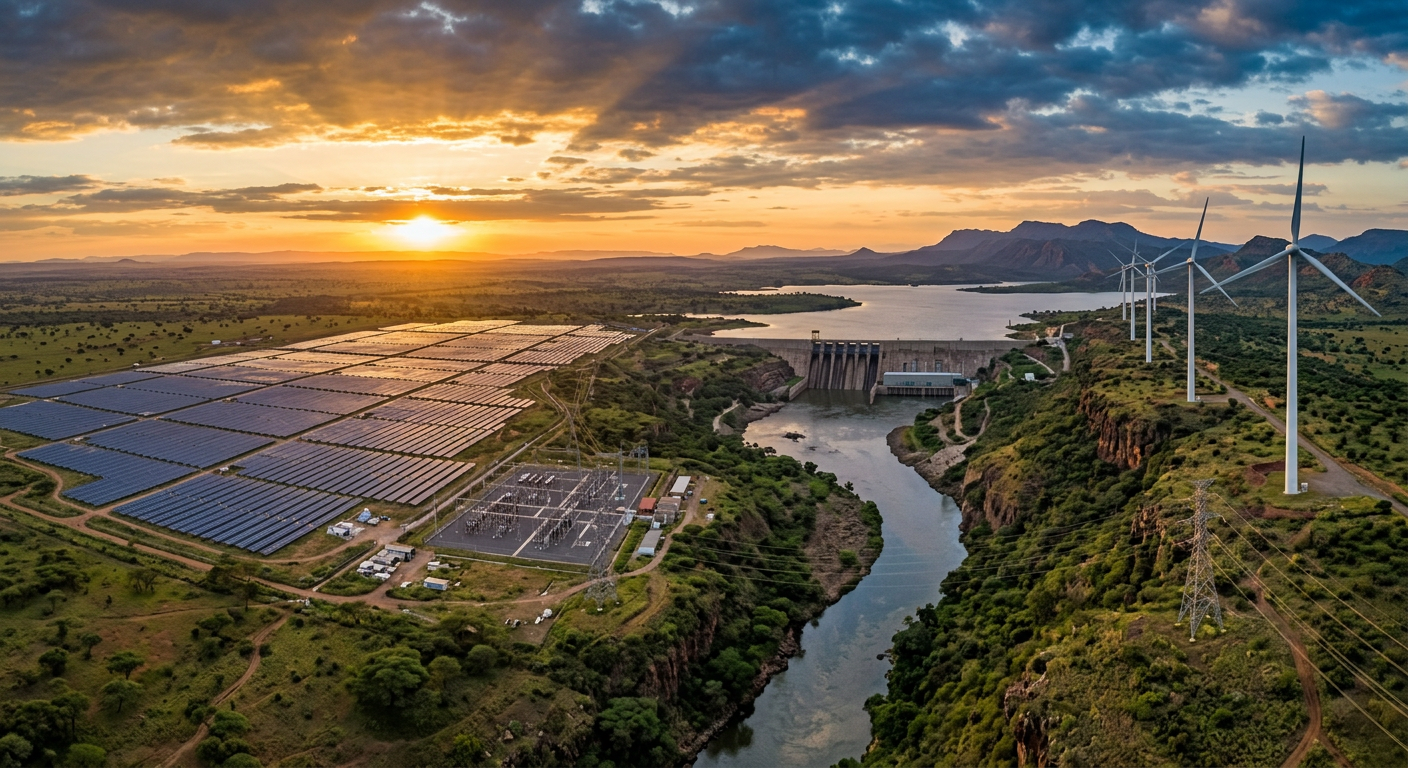
Africa's renewable energy resource base is extraordinary by global standards. Solar: sub-Saharan Africa receives average solar irradiation of 2,000 kWh/m² per year — approximately 50% more than Germany, which has built the world's most developed solar industry. Wind: South Africa's Northern and Western Cape, Morocco's Atlantic coastline, and East Africa's highlands and lake shores all have world-class wind resources. Geothermal: Kenya already generates 40%+ of its electricity from geothermal alone, with Ethiopia, Djibouti, Rwanda, and Tanzania having significant untapped geothermal potential. Hydro: the Congo River has the potential to generate 100,000 MW of electricity — more than the entire current installed capacity of Sub-Saharan Africa combined — from the Grand Inga project alone.
The Off-Grid Revolution
One of Africa's most significant energy sector stories is the off-grid energy revolution — the deployment of solar home systems, solar lanterns, and small-scale solar+storage systems that are providing electricity to households and businesses beyond the reach of the grid, without waiting for grid extension that may take decades.
The pay-as-you-go solar model — popularised by M-KOPA Solar, BBOXX, d.light, and Zola Electric — has provided electricity access to over 10 million African households that are not connected to the national grid. The model works by making solar home systems affordable through small daily or weekly payments collected via mobile money, calibrated to the user's income pattern. A family that cannot afford the upfront cost of a solar system can afford a few cents per day — and the cumulative payments over 12–24 months cover the system cost, after which the household owns the system outright.
The impact has been transformative: off-grid solar provides light for studying, powers mobile phone charging, enables small business activity after dark, and replaces kerosene lighting whose cost (typically $10–20/month) often exceeds the pay-as-you-go solar payment. The commercial model is also compelling — the combination of mobile money payment infrastructure, remote monitoring technology, and consumer demand has attracted over $1 billion in venture and impact capital into the off-grid solar sector.
Utility-Scale Renewable Energy
Africa's utility-scale renewable energy sector has grown substantially, driven by government programmes (Kenya's REFIT, South Africa's REIPPPP, Morocco's NOOR solar programme, Egypt's New and Renewable Energy Authority) that provide structured procurement frameworks for private sector renewable energy investment. These programmes — offering long-term power purchase agreements at known prices to renewable energy developers — have catalysed billions of dollars of private investment in solar, wind, and geothermal projects across the continent.
South Africa's Renewable Energy Independent Power Producer Procurement Programme (REIPPPP) is the continent's most established and most studied model. Having procured over 6,000 MW of renewable energy capacity from private developers since 2011, it has demonstrated both the commercial viability of private renewable energy in African markets and the importance of stable, well-designed regulatory frameworks for attracting international renewable energy investment. Morocco's NOOR solar programme — developing what is one of the world's largest solar complex at Ouarzazate — similarly demonstrates the scale of renewable energy investment possible when governments create the right conditions.
Energy Storage: The Missing Piece
The primary technical challenge for renewable energy integration across Africa — as globally — is storage: ensuring that electricity generated by solar panels during the day and wind turbines during variable wind periods is available when it is needed, not only when it is generated. Battery storage costs have fallen approximately 90% over the past decade, making grid-scale and distributed storage increasingly economically viable. Several African countries are deploying battery storage systems alongside renewable generation — Kenya, South Africa, and Ghana all have projects in development. The declining cost trajectory suggests that battery storage will be economically viable for widespread deployment across African energy systems within the next 3–5 years, removing the primary technical barrier to high renewable energy penetration.
Investment Landscape and Opportunity
African renewable energy investment comes from a combination of: development finance institutions (AfDB's Africa50 fund, IFC, CDC/BII, and bilateral development banks that collectively provide substantial concessional and commercial financing); international private equity and infrastructure funds (Actis, Helios, and several others with dedicated African energy portfolios); strategic investors (international energy companies including EDF, ENGIE, and Enel with significant African renewable portfolios); and increasingly, African institutional investors (pension funds and insurance companies seeking stable, long-term infrastructure returns).
The investment opportunities span the full renewable energy value chain: project development (identifying, permitting, and developing renewable energy projects); financing (providing debt and equity capital for projects); equipment supply (distribution of solar panels, inverters, and storage systems); installation and maintenance services; and software and monitoring systems that optimise renewable energy system performance. For entrepreneurs and investors with technical capability and patience for infrastructure investment timelines, African renewable energy is one of the most compelling long-term opportunity categories on the continent.