Ghana Opportunity Report 2025: West Africa's Gateway of Stability and Potential
A comprehensive analysis of Ghana
Ghana occupies a distinctive position in West Africa's economic landscape. It is not the region's largest economy — Nigeria is substantially larger. It is not the most technologically advanced — by raw innovation output, Nigeria again leads. But Ghana combines a set of characteristics that make it, for specific opportunity categories, one of Africa's most attractive markets: three decades of stable multiparty democracy, English as the official language, a well-educated and internationally oriented professional class, improving digital infrastructure, and a government that has been more consistently business-friendly than most West African peers.
Economic Overview and Recent Challenges
Ghana's economic trajectory has been one of West Africa's most positive over the past two decades — but the period 2022–2024 tested this track record severely. A combination of global commodity price shocks (Ghana exports gold, cocoa, and oil), COVID-19 revenue disruption, and significant public debt accumulation led Ghana to seek an IMF programme in 2023 — its 17th engagement with the Fund. The IMF-supported adjustment programme has involved fiscal consolidation (significant spending cuts and tax increases) that have been painful but are rebuilding macroeconomic stability.
The underlying economy retains genuine strengths. A diversified export base (gold, cocoa, oil) provides commodity revenue insulation. The services sector — including financial services, telecommunications, and growing technology — is expanding. And the democratic institutional framework that enables peaceful political transitions — a genuine competitive advantage for long-term investment — has been maintained through the economic turbulence.
The Startup Ecosystem: Growing Rapidly
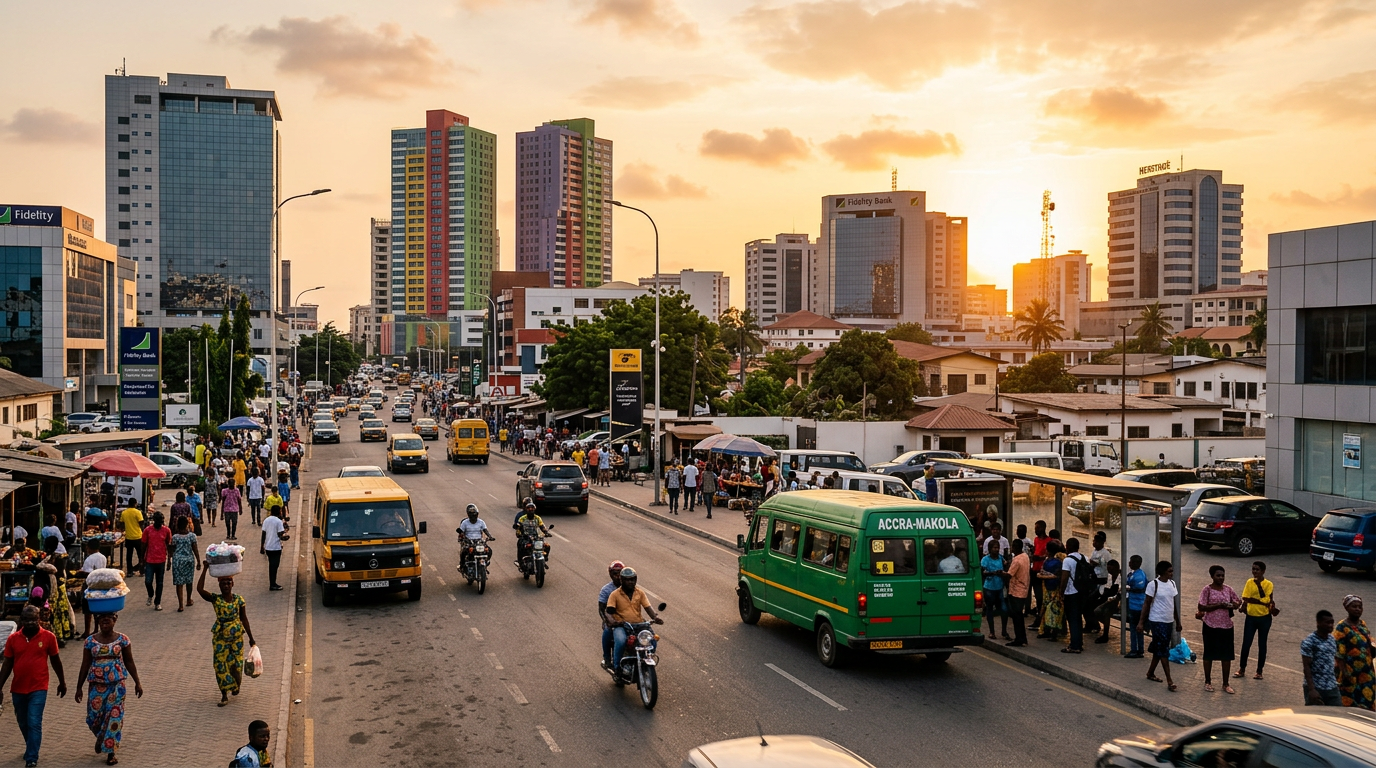
Accra's startup ecosystem is West Africa's fastest growing outside Lagos, driven by a combination of: the Year of Return and subsequent diaspora engagement campaigns that attracted diaspora capital and entrepreneurs; improving digital infrastructure (mobile penetration above 95%, expanding 4G coverage); a university system producing technically capable graduates; and increasing international investor attention. The ecosystem is particularly strong in fintech (GhIPSS, the Ghana Interbank Payment and Settlement System, provides payment infrastructure comparable to Kenya's in several respects), agritech (Ghana is one of Sub-Saharan Africa's most significant agricultural exporters), and increasingly in software services companies building for international clients.
Key Opportunities
Fintech and Financial Inclusion
Ghana's financial inclusion opportunity is significant — approximately 40% of Ghanaians remain unbanked or underbanked — and the regulatory environment has been more consistently innovation-friendly than Nigeria's. The Bank of Ghana's sandbox framework enables fintech product development with regulatory clarity. Mobile money penetration (MTN Mobile Money and other operators) has created the digital payment infrastructure that enables fintech companies to build without needing to establish their own payment rails.
Agriculture and Agritech
Ghana's agricultural sector — exporting cocoa (second globally), cashews, pineapples, and other products — represents both a significant existing industry and an underserved technology opportunity. Smallholder cocoa and food crop farmers face the same input access, credit, market information, and climate challenges as their counterparts across Africa. The difference in Ghana is the maturity of the cocoa supply chain — which has established aggregation infrastructure that agritech companies can integrate with — and the country's agricultural export orientation, which creates larger addressable markets for productivity-enhancing technology.
Technology Services and BPO
Ghana's combination of English language, educated talent, competitive labour costs, and improving digital infrastructure has made it an increasingly attractive destination for technology services and business process outsourcing (BPO). Several international companies have established Ghana-based software development and customer service operations. The Ghana government's "Digital Ghana" initiative has invested in fibre infrastructure and digital skills development that is progressively improving the talent and infrastructure foundation for this sector.
Investment Climate
Ghana's investment climate strengths: political stability (the most important single factor for long-term investment decisions); English language business environment; relatively functional legal system based on English common law; improving infrastructure (road, power, and digital); and a government that has historically welcomed foreign investment. The primary challenges: the current fiscal adjustment programme creates short-term economic contraction; public debt levels require careful monitoring; and infrastructure outside Accra and the major cities lags behind the capital significantly. For international investors seeking West African exposure with lower operational risk than Nigeria, Ghana is typically the first alternative considered — and increasingly, a primary destination in its own right.