
Johannesburg Opportunity Index 2025: Africa's Corporate and Financial Capital
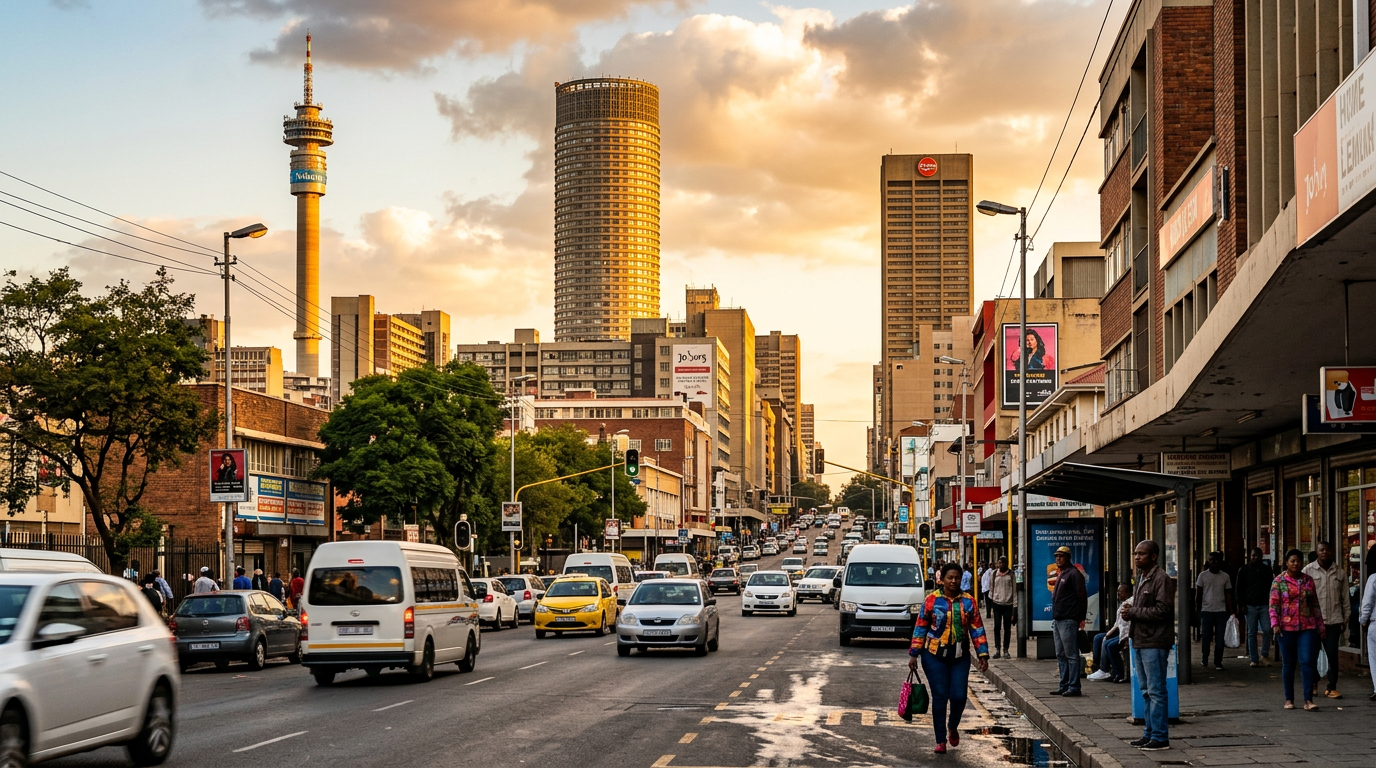
A comprehensive assessment of Johannesburg
Johannesburg is not Cape Town — and understanding the difference is essential for accurately assessing its opportunity. Where Cape Town attracts international founders and lifestyle-motivated entrepreneurs, Johannesburg is a city of corporate density, institutional depth, and professional services sophistication. The Johannesburg Stock Exchange (JSE) lists over 300 companies with a combined market capitalisation exceeding $1 trillion. Most major international companies operating in Sub-Saharan Africa have their regional headquarters in Johannesburg. And the professional services ecosystem — legal, accounting, consulting, financial advisory — is the continent's largest and most sophisticated. This is not a startup city in the Nairobi or Lagos mould; it is Africa's corporate capital, and the opportunities it offers reflect that character.
Corporate and Financial Infrastructure Score: 9.8/10
Johannesburg's corporate and financial infrastructure is without parallel in Africa. The JSE provides an exit pathway — through listing or secondary market liquidity — unavailable to companies based elsewhere on the continent. The concentration of regional headquarters from global corporations (most major multinationals serving Sub-Saharan Africa are headquartered in Johannesburg's Sandton district) creates an enterprise customer density for B2B technology, professional services, and corporate innovation companies that no other African city matches. The financial sector — banking, asset management, insurance, private equity — is the continent's most sophisticated and provides both customer relationships and capital access.
Enterprise Startup Opportunity Score: 8.5/10
While Johannesburg's consumer startup ecosystem is less prominent than Cape Town's or Nairobi's, its enterprise technology opportunity is Africa's strongest. B2B SaaS companies targeting African corporate customers, professional services technology companies, financial technology companies serving the institutional market, and companies building for the multinational enterprise market in Africa are all optimally positioned in Johannesburg — where their customers are headquartered, where procurement decisions are made, and where the relationships that drive enterprise sales are built. Several of South Africa's most commercially successful technology companies (including Yoco, with corporate partners, and several healthcare and property technology companies) are Johannesburg-headquartered.
Talent Market Score: 8.0/10
Johannesburg's talent market has South Africa's deepest corporate professional talent pool — finance, legal, accounting, management consulting, and technology professionals with international-quality training and experience. The University of the Witwatersrand, University of Pretoria, and several others produce strong engineering and business graduates. The challenge is different from Nairobi or Lagos's: Johannesburg's most experienced professionals have options in the corporate sector that make them expensive and difficult to attract to early-stage ventures. The best strategy for Johannesburg startups is typically to hire from the corporate sector for specific domain expertise while recruiting junior talent from universities for operational roles.
Safety and Infrastructure Score: 6.5/10
Johannesburg's safety profile requires specific acknowledgement in any honest city opportunity assessment. The city has significant crime rates — particularly car hijacking, mugging, and residential burglary — that require security consciousness, security investment (electric fencing, alarm systems, security estates), and geographic awareness that residents of safer cities do not encounter. This adds both financial cost (security systems, secure accommodation premium) and cognitive load to daily life that affects quality of life even for those who have not personally experienced crime. Infrastructure — power, internet, roads in established commercial areas — is otherwise reliable by African standards.
Opportunity Index Summary
| Dimension | Score | Key Strength | Key Gap |
|---|---|---|---|
| Corporate Ecosystem | 9.8/10 | JSE, multinational HQs, professional services | Startup culture less developed |
| Enterprise Startup Opportunity | 8.5/10 | B2B customer density, procurement access | Consumer market inequality limits B2C |
| Talent Market | 8.0/10 | Corporate talent depth, business sophistication | Talent cost, corporate pull |
| Infrastructure | 7.5/10 | Digital, roads, financial system | Power residual risk, security costs |
| Market Access | 7.5/10 | SA market, Africa regional hub | Geographic distance from East/West Africa |
| Safety | 5.5/10 | Manageable in established areas | High crime rate requires significant adaptation |
| Quality of Life | 7.0/10 | Restaurants, culture, sports | Crime, sprawl, car-dependency |
| Overall Score | 7.7/10 | Africa's best city for enterprise tech and B2B startups | |
Who Johannesburg Is Best For
Johannesburg is optimal for: B2B technology companies targeting South African and African corporate customers; professional services firms (legal tech, accounting tech, HR tech) where the enterprise customer density is unmatched; financial technology companies building for the institutional market; and international companies establishing African regional headquarters who need proximity to the continent's corporate decision-making centre. It is less optimal for: consumer-facing startups where the domestic market's inequality limits addressable market; lifestyle-motivated founders who value quality of life over commercial density; and early-stage founders who need ecosystem support infrastructure that is stronger in Cape Town or Nairobi.