Lagos Opportunity Index 2025: Africa's Commercial Capital Assessed
A comprehensive measurement of Lagos
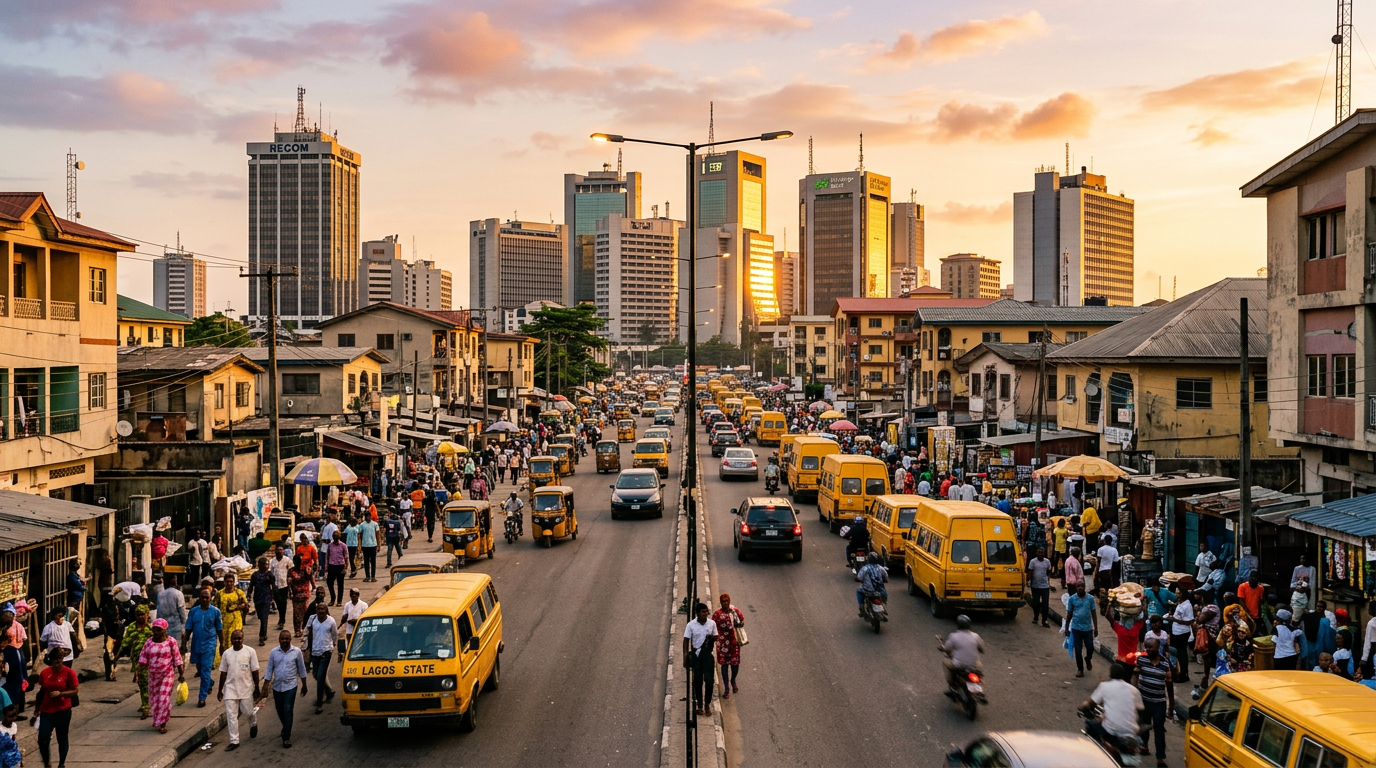
Lagos defies the frameworks that work for other cities. It is simultaneously the city with Africa's largest startup funding volume and one of the most operationally challenging places on the continent to run a business. A city of 25 million people representing every income level, every industry, and every demographic characteristic of Nigeria simultaneously — and therefore the most powerful product-market fit testing environment in Africa. A city where infrastructure failures are routine and entrepreneurial workarounds are constant — creating a resilience and resourcefulness in Lagos-built companies that is a genuine competitive advantage when they expand to easier markets. Understanding Lagos requires releasing the frameworks of other cities and engaging with it on its own terms.
Startup Ecosystem Score: 9.3/10
By raw funding volume and company quality, Lagos has Africa's strongest startup ecosystem. The numbers are unambiguous: more venture capital has flowed into Lagos-headquartered companies than any other African city, consistently across multiple years. The most globally recognised African technology companies — Flutterwave, Paystack, Andela, Interswitch, OPay, PalmPay — are Lagos-founded or Lagos-headquartered. The ecosystem's concentration in Yaba (the "Silicon Yaba" technology district) creates a community density of founders, investors, and operators that generates the kind of serendipitous connection and knowledge sharing that only dense ecosystems produce.
Lagos's ecosystem strengths beyond raw numbers: the largest pool of technology operators in Africa who have built, scaled, and sometimes exited companies and are now reinvesting as angels and advisors; the strongest diaspora investment network on the continent, with Nigerian professionals in London, New York, and Houston actively co-investing in Nigerian startups; and the most sophisticated brand partnership and influencer marketing ecosystem in Africa, which matters enormously for consumer-facing companies building in Nigeria.
Talent Market Score: 9.0/10
Lagos's talent market is Africa's largest and, for many roles, deepest. Nigeria produces the continent's largest number of university graduates annually — approximately 600,000 — and Lagos concentrates the most ambitious and entrepreneurially motivated subset of this talent. The technology talent pool is particularly large: Lagos has produced more software engineers than any other African city, supplemented by returnees from the Nigerian diaspora who bring international experience alongside local market understanding.
The talent market challenge is similar to Nairobi's but more acute: experienced technology professionals are in genuinely scarce supply relative to the enormous demand, creating salary expectations that early-stage companies struggle to meet. The solution that most successful Lagos startups have found is investing in building talent rather than buying it: hiring graduates and junior professionals and investing in their development, rather than competing for the scarce experienced talent that multiple well-funded companies are simultaneously seeking.
Infrastructure Score: 5.8/10
Lagos's infrastructure is, honestly, inadequate for the scale of commercial activity it hosts — and this inadequacy is a significant operating cost and risk factor that any honest assessment must acknowledge prominently. Power supply is unreliable: most businesses run generators for significant portions of the day, adding 15–25% to operational costs. Road congestion is severe: the daily commute from Victoria Island to Lekki, or from the Island to the Mainland, can consume 2–4 hours in each direction during peak traffic. Internet connectivity is reasonable in commercial areas (fibre and 4G) but variable. Logistics and last-mile delivery face the severe addressing and road quality challenges described in our Digital Commerce section.
The infrastructure constraints are real — but they are also the context in which hundreds of successful businesses have been built. Companies that design their operations around Lagos's infrastructure reality — with power backup, remote work flexibility, neighbourhood office strategies that reduce cross-city commuting, and logistics partners who understand the addressing challenges — find them manageable. Those that design for Lagos's aspiration rather than its reality consistently underperform.
Market Access Score: 10/10
Lagos's domestic market access is unmatched in Africa. A city of 25 million people representing every Nigerian income level is, by itself, a consumer market larger than many African countries. The broader Nigerian market of 220 million — directly accessible from Lagos — is the largest in Africa. And Lagos's position as Nigeria's commercial capital means that virtually every Nigerian company, international company operating in Nigeria, and government supplier has a Lagos presence — making B2B market access as strong as B2C. For companies where market size is the primary opportunity dimension, Lagos is the clear leader.
Opportunity Index Summary
| Dimension | Score | Key Strength | Key Gap |
|---|---|---|---|
| Startup Ecosystem | 9.3/10 | Funding volume, company quality, diaspora | Early-stage support infrastructure |
| Talent Market | 9.0/10 | Pool size, entrepreneurial culture | Experienced talent scarcity and cost |
| Infrastructure | 5.8/10 | Digital connectivity improving | Power, traffic, logistics |
| Regulatory Environment | 5.5/10 | Large market justifies complexity | Unpredictability, FX policy |
| Cost of Doing Business | 6.0/10 | Talent costs below Western equivalents | Generator, security, transport costs |
| Market Access | 10/10 | Africa's largest domestic market | Distribution complexity |
| Quality of Life | 6.5/10 | Vibrant culture, food, entertainment | Traffic, pollution, security |
| Overall Score | 7.4/10 | Africa's highest-ceiling, highest-friction opportunity city | |
Who Lagos Is Best For
Lagos is best for: founders building products and services for Nigeria's mass market, who need direct proximity to the largest consumer market in Africa; companies where the ecosystem advantages (investor density, operator network, diaspora capital) outweigh the operational friction; Nigerian founders who have personal relationships and cultural intelligence that reduce the friction for others; and high-resilience entrepreneurs who are energised rather than depleted by intensity and complexity. It is less optimal for: founders who need operational tranquillity and infrastructure reliability; international founders without Nigerian personal networks who will face the full friction without the compensating cultural and relationship advantages; and companies where the domestic Nigerian market is not the primary target (the Lagos premium is only justified if the market opportunity justifies it).