Morocco Opportunity Report 2025: Africa's Atlantic Gateway and Emerging Innovation Hub
A comprehensive analysis of Morocco
Morocco is, by several measures, Africa's most underappreciated major economy. While the continent's commercial discourse focuses primarily on Nigeria, Kenya, South Africa, and Egypt, Morocco has been quietly building one of Africa's strongest investment environments: stable institutions, improving infrastructure, a business-friendly government with consistent reform commitment, and a strategic geographic position at the intersection of Europe, Africa, and the Atlantic that no other African country occupies. The country is increasingly recognised by international businesses as a natural gateway for North African and pan-African operations — and for Sub-Saharan African businesses seeking European market access.
Economic Overview
Morocco's economy is diversified across phosphate mining and fertiliser exports (Morocco controls approximately 70% of global phosphate reserves — an extraordinary strategic commodity position), tourism, remittances from a large diaspora primarily in France and Spain, agriculture, manufacturing (automotive components and aerospace have grown significantly), and financial services. The economic management has been consistently sound by African standards: fiscal deficits are maintained within manageable bounds, inflation has been relatively controlled, and the institutional framework for business — banking regulation, property law, contract enforcement — is among Africa's most reliable.
The 2030 FIFA World Cup — co-hosted by Morocco, Spain, and Portugal — is driving an infrastructure investment cycle of extraordinary scale: new stadiums, transport links, hotel capacity, and urban development across Morocco's major cities. This infrastructure investment creates significant opportunities for construction, materials, hospitality, and services companies and is positively affecting Morocco's international profile and tourism infrastructure simultaneously.
The Casablanca Finance City: Africa's Financial Hub
Casablanca Finance City (CFC) is Morocco's deliberate project to make Casablanca the preferred financial and business hub for pan-African operations. CFC provides a specific regulatory framework — reduced corporate tax rates, simplified licensing, international accounting standards, English-language legal documentation — designed to attract regional headquarters, financial institutions, and professional services firms. By 2024, CFC hosts the African operations of more than 200 international companies, including BNP Paribas, Société Générale, Zurich Insurance, and multiple international consulting firms. For international businesses seeking an African regional headquarters combining European-quality infrastructure with African market access, CFC has become a genuinely competitive option.
The Technology and Innovation Ecosystem
Morocco's technology ecosystem is centred on Casablanca and the Rabat-Salé metropolitan area (where several government technology institutions are located), with Marrakech emerging as a third technology centre. The ecosystem is notable for its software development services sector — Morocco has developed significant capability in providing IT services to French and European clients, leveraging French language capability, time zone alignment with Europe, and competitive labour costs. Several Moroccan technology companies have built international client bases, particularly in France and West Africa.
The startup ecosystem is earlier-stage than Egypt's or South Africa's by most measures, but government investment — through the Moroccan Innovation National Initiative and several sector-specific programmes — has created accelerators, incubators, and seed funding mechanisms that are building the infrastructure of a more developed ecosystem. The most promising startup categories are fintech (addressing Morocco's still-significant unbanked population and cross-border payment needs), agricultural technology (Morocco's large agricultural sector remains significantly underserved by technology), and software services (building on the established IT services export capability).
The Pan-African Strategic Position
Morocco's most distinctive strategic asset for international businesses is its position as a genuine Africa-Europe connector. Moroccan banks — Attijariwafa Bank, Banque Populaire du Maroc — have pan-African operations across 25+ African countries, making Morocco a natural hub for Africa-wide financial services businesses. Moroccan telecoms company Maroc Telecom operates across West and Central Africa. And Morocco's diplomatic positioning — as an African Union member state with strong European relationships — creates commercial connections across both the continent and its northern neighbours.
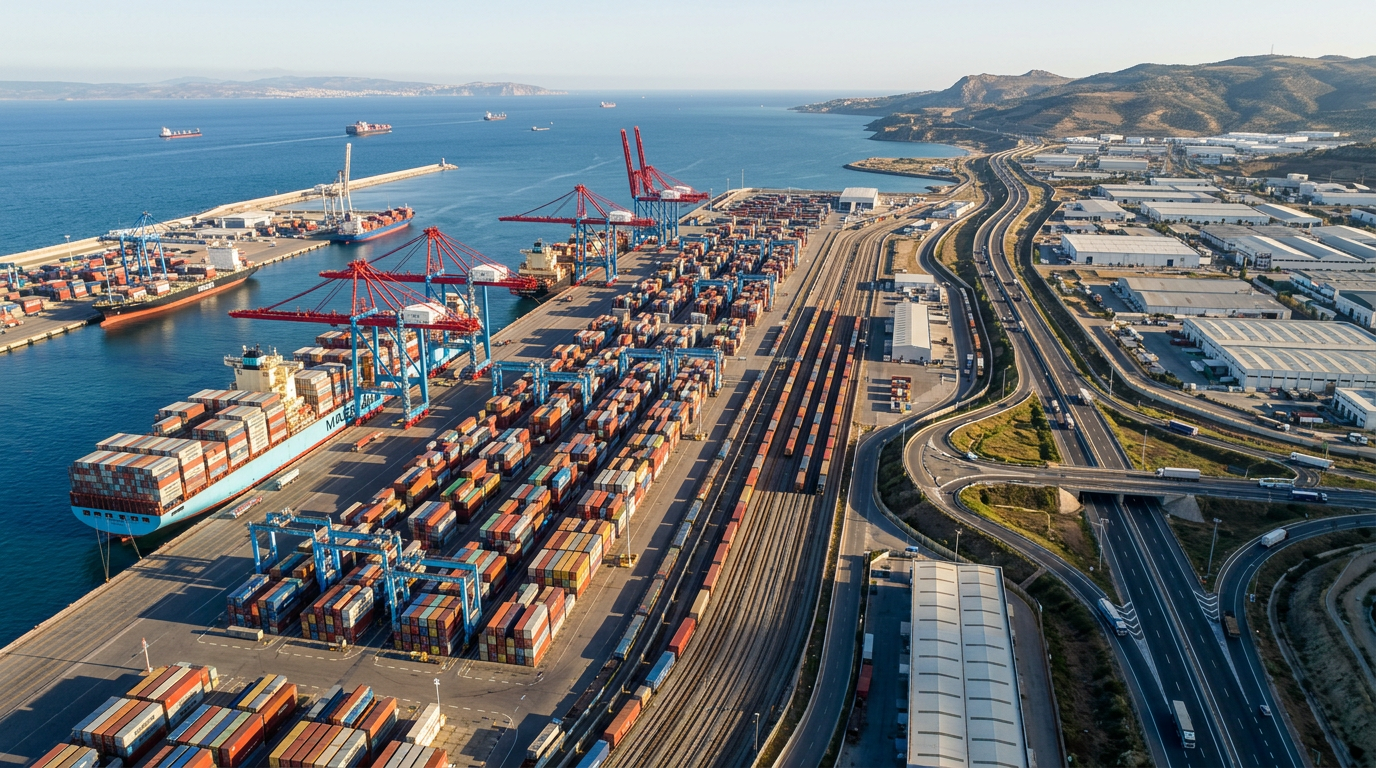
For Sub-Saharan African businesses seeking European market access, Morocco offers: physical proximity to Europe (14km across the Strait of Gibraltar), preferential trade agreements with the European Union, French language capability, and established logistics infrastructure across Atlantic and Mediterranean routes. For European businesses seeking African market entry, Morocco offers: a familiar business environment and legal framework, established banking infrastructure, and the human capital to build and manage regional operations.
Outlook: 2025–2027
Morocco's near-term outlook is among Africa's most positive. The 2030 World Cup infrastructure investment is accelerating economic activity across construction, hospitality, and services. The renewable energy transition — Morocco aims for 52% renewable electricity by 2030 and is already a major wind and solar exporter to Europe — is attracting significant international investment. The technology services sector is growing consistently. And Morocco's institutional quality — genuinely stable, genuinely improving — provides the foundation that sustains long-term investment confidence even as specific economic cycles fluctuate. The primary risk is social: inequality remains significant, youth unemployment is high in some regions, and the social contract between the state and citizens bears monitoring. But the economic foundations and institutional quality are among Africa's strongest.