Nigeria Opportunity Report 2025: Africa's Giant at a Crossroads
A comprehensive analysis of Nigeria
Nigeria defies easy characterisation. It is simultaneously the country that produced Flutterwave, Paystack, Andela, and Interswitch — genuinely world-class technology companies — and a country where 63% of people live in multidimensional poverty. A country with the largest English-speaking population in Africa, an extraordinarily entrepreneurial culture, and some of the continent's most sophisticated professional talent — and a country where doing business involves navigating regulatory unpredictability, infrastructure constraints, and macroeconomic instability that exhaust the most resilient founders. Understanding Nigeria's opportunity requires holding both realities simultaneously rather than selecting the optimistic or pessimistic narrative alone.
Economic Overview
Nigeria's economy is Africa's largest by GDP — but its per-capita income is lower than several smaller African economies, reflecting the extreme inequality between Nigeria's wealthy elite and its large poor majority. The economy is heavily dependent on oil revenues: petroleum accounts for approximately 10% of GDP but 70%+ of government revenue and 90%+ of export earnings. This oil dependence creates structural vulnerability to commodity price shocks that has repeatedly destabilised the economy — and drives the diversification imperative that the government has articulated but struggled to execute consistently.
The Tinubu administration's economic reforms — initiated in 2023 — represent the most significant structural economic changes in Nigeria in a generation. The unification of exchange rates (ending the multiple-rate system that distorted the economy), removal of fuel subsidies (ending one of Nigeria's most fiscally damaging policies), and monetary policy tightening have collectively caused significant short-term pain — the naira lost over 60% of its value in 2023 — but are broadly viewed by economists as necessary preconditions for sustainable growth. The medium-term economic outlook, while uncertain, is more fundamentally sound than the pre-reform structure allowed.
The Startup Ecosystem: Scale and Sophistication
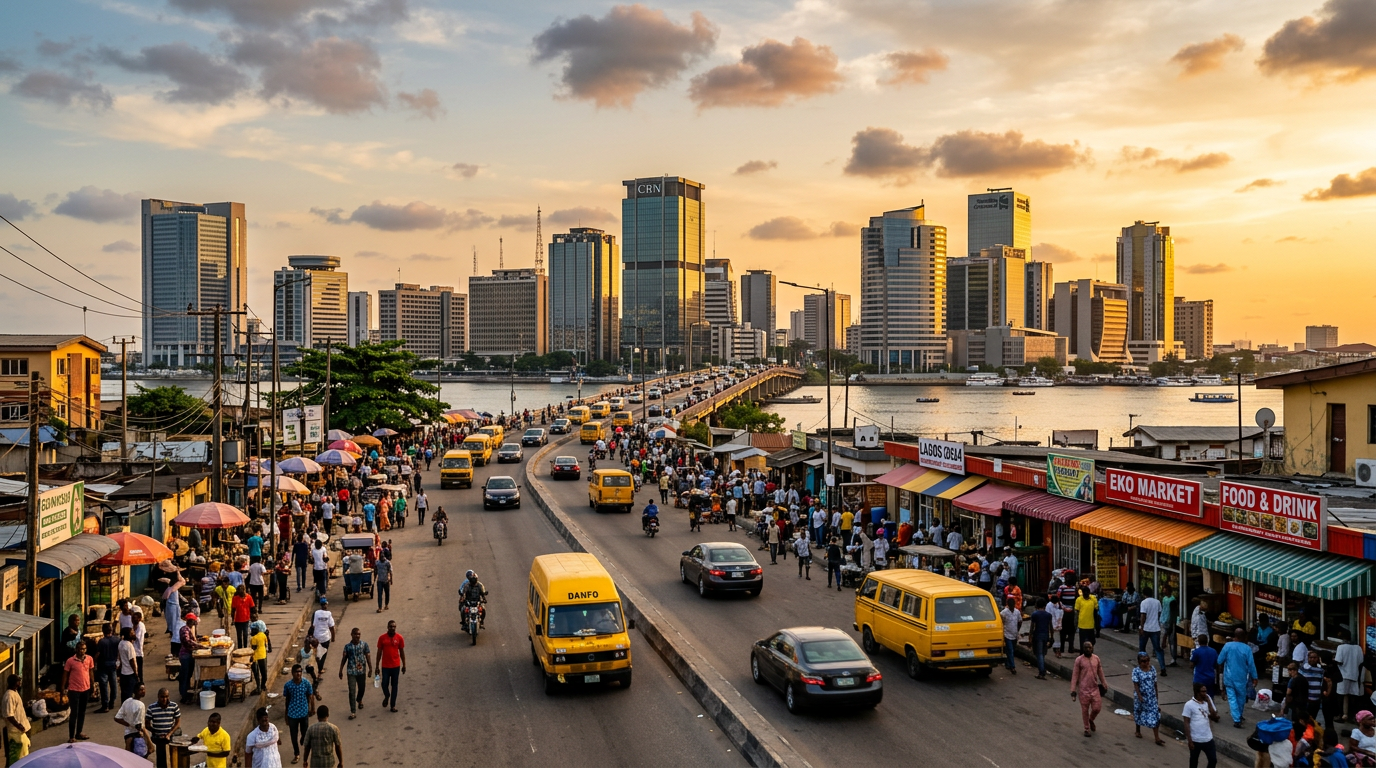
Nigeria's startup ecosystem is Africa's largest by deal count and among its most sophisticated by company quality and investor presence. Lagos's Yaba technology district has produced more significant technology companies than any other African city neighbourhood: Paystack (acquired by Stripe for $200M), Flutterwave (Africa's most valuable startup at peak, valued at over $3 billion), Andela (developer talent company with international client base), Interswitch (the payment infrastructure company that preceded the fintech boom), and dozens of significant Series A and B companies.
The ecosystem's strengths are distinctive. Nigeria's domestic market — 220 million people with every income level represented — is the best product-market fit testing environment in Africa. A company that works in Lagos has been tested against the most demanding, most price-sensitive, most logistically complex consumer market on the continent. The talent pool is large, technically capable, and deeply entrepreneurially motivated. And the diaspora — Nigerian professionals and entrepreneurs in London, New York, Atlanta, Houston, and Silicon Valley — provides capital, network, and customer access that few other African ecosystems can match.
Key Opportunity Sectors
Financial Services and Fintech
Nigeria's fintech opportunity is the continent's largest in absolute terms — 60+ million unbanked adults, a formal financial system that serves a minority of the population, and mobile money adoption that has grown explosively. The Central Bank of Nigeria's regulatory interventions create complexity and uncertainty — the 2022 fintech guidelines imposed significant compliance requirements — but also signal that the sector is large enough to require serious regulatory attention. For founders who can navigate the regulatory environment, the market opportunity is unparalleled: Nigeria processed over $200 billion in digital payment transactions in 2023, and financial inclusion penetration is still at early stages relative to the opportunity.
Commerce and Logistics
Nigeria's commerce opportunity is the continent's largest consumer market opportunity: 220 million consumers, rapidly urbanising, with a growing middle class demanding better products and services. The logistics complexity that serves as a barrier to entry also creates competitive moat for companies that solve it. Platforms that efficiently connect buyers and sellers, that build reliable last-mile delivery networks, or that organise the informal distribution networks that currently serve most Nigerian consumers are building in one of the world's most commercially significant underserved markets.
Healthcare
Nigeria's healthcare opportunity is both commercially significant and critically important for human development. A population of 220 million people with limited access to quality healthcare, a growing private health sector, increasing health insurance adoption, and significant international interest in Nigerian healthcare investment combine to make health technology one of Nigeria's most interesting current startup categories. Telemedicine, diagnostic platforms, pharmacy logistics, and health insurance technology are all active investment areas.
The Challenges: Honest Assessment
Operating in Nigeria requires genuine resilience and specific capabilities that many entrepreneurs underestimate. Foreign exchange volatility — the naira's value can shift significantly within months — requires business model design that is explicitly FX-aware, with natural hedging where possible. Power infrastructure gaps add 15–30% to operating costs through generator fuel and backup systems. Regulatory unpredictability — policies changing with limited notice and inconsistent enforcement — requires ongoing regulatory intelligence as a business function. Security considerations in some states and neighbourhoods require operational planning that businesses in more secure environments do not face. None of these is disqualifying — millions of successful businesses operate in Nigeria despite them. But founders who enter without understanding these realities face avoidable surprises.
Outlook: 2025–2027
Nigeria's medium-term outlook is the most complex assessment among Africa's major markets. The economic reforms of 2023–2024, while painful in the short term, create better structural foundations for sustainable growth than the distorted pre-reform economy provided. Exchange rate unification enables business planning and investment attraction that multiple parallel rates made impossible. Fuel subsidy removal releases fiscal resources for infrastructure and social spending. If political commitment to reform is sustained — not a certainty in Nigeria's complex political economy — the 2025–2027 period could see meaningful economic recovery and growth. The technology and startup sector, which has shown remarkable resilience through the reform disruption, is positioned to benefit disproportionately from any macroeconomic stabilisation.